The Invisible Hand Behind Your Favourite Moments
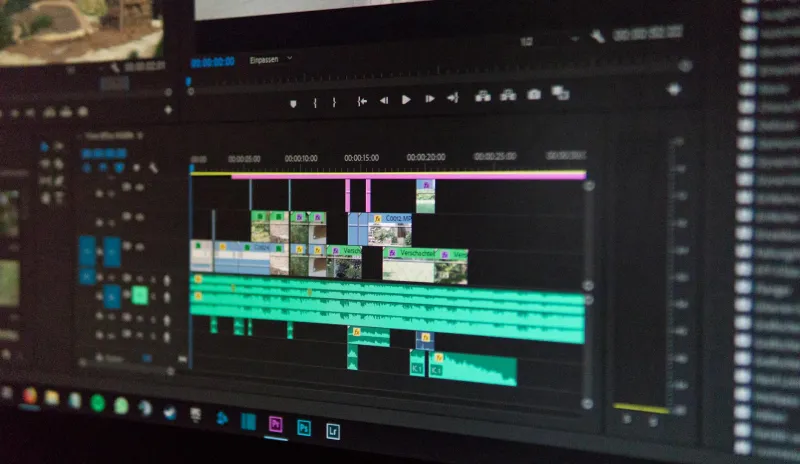
You know that moment in Line of Duty when everything clicks into place? That perfectly timed pause before the big reveal in Happy Valley? The way a Coronation Street scene builds to its emotional crescendo? None of it happens by accident. Behind every goosebump-inducing sequence sits an editor, hunched over a timeline, crafting magic from chaos.
And increasingly, that editor is likely to hail from somewhere north of Watford.
"People don't realise how much we shape what they're feeling," explains Sarah Whitworth, a Stockport-born editor whose credits span everything from gritty BBC dramas to ITV's biggest Saturday night entertainment shows. "We're not just cutting scenes together – we're controlling time itself. We decide when you breathe, when your heart races, when you laugh."
More Than Just Pressing Buttons
The art of editing might seem technical – all timelines, transitions, and colour correction – but speak to any Northern editor worth their salt and they'll tell you it's pure storytelling. It's about understanding people, reading between the lines, and knowing exactly when to hold back and when to unleash.
"There's something about growing up in the North that gives you an ear for authentic emotion," reckons Dave Hartley, a Leeds-based editor who's worked on some of Channel 4's most acclaimed documentaries. "We don't do flash for flash's sake. We cut to the bone of what matters."
That Northern sensibility – straight-talking, no-nonsense, emotionally honest – translates beautifully to the editing suite. While their southern counterparts might chase the latest trendy transition or effect, Northern editors tend to serve the story first, technique second.
The Rhythm of Real Life
Talk to enough Northern editors and a pattern emerges. They speak about "rhythm" and "breathing space" in ways that suggest they're conducting an orchestra rather than manipulating digital files. Perhaps it's no coincidence that many grew up in households where music mattered – brass bands, working men's clubs, the kind of communal experiences that teach you about timing and collective emotion.
"My dad played in a colliery band," says Manchester's Emma Thornton, whose editing work on Peaky Blinders helped define the show's distinctive visual language. "You learn about build-up, about tension and release. Every scene has its own tempo, and you've got to feel it rather than think it."
This musical sensibility shows up in unexpected places. Northern editors often excel at comedy timing – that split-second difference between a laugh and a groan. They understand the value of silence, the power of letting a moment breathe before cutting to the next shot.
Training Grounds and Proving Grounds
The North's rich television heritage provides the perfect training ground. From the BBC's Salford operation to the thriving indie production scene in cities like Sheffield and Newcastle, there are opportunities to learn the craft without having to migrate south.
"I started cutting local news packages in Hull," remembers Tom Bradley, now one of the UK's most sought-after drama editors. "Proper grassroots stuff – three-minute pieces about planning applications and parish council meetings. But you learn economy that way. Every second has to count."
That economic mindset – waste not, want not – seems embedded in the Northern editing DNA. While London editors might have the luxury of multiple takes and endless footage, Northern-trained editors learned to make magic from whatever they were given.
The Digital Revolution's Northern Champions
As editing technology democratised, Northern editors were quick to embrace new possibilities while maintaining their focus on storytelling fundamentals. The region's technical colleges and universities began producing graduates who could handle the latest software but still understood that technology serves story, not the other way around.
"The tools changed, but the principles didn't," observes Liverpool-based editor Rachel Morrison, whose work spans everything from music documentaries to prime-time soaps. "A good cut is still a good cut, whether you're working on film or on a laptop."
Shaping the Nation's Stories
Perhaps most importantly, Northern editors bring their own experiences to bear on the stories they shape. They understand working-class narratives not as exotic curiosities but as lived reality. They can spot when dialogue rings false or when a character's motivation doesn't quite add up.
"We're not editing from the outside looking in," says Hartley. "These are our stories, our people. That authenticity comes through in every cut."
As British television continues to embrace regional voices and stories, the influence of Northern editors becomes even more significant. They're not just cutting together scenes – they're helping define how the nation sees itself, one frame at a time.
In those dark editing suites, with their multiple monitors and endless cups of tea, Northern editors continue their quiet revolution. They may not appear in the credits until the very end, but their fingerprints are all over the moments that matter most.