Buffering in the Dales: Why the People Who Inspire Our Best TV Can't Always Watch It
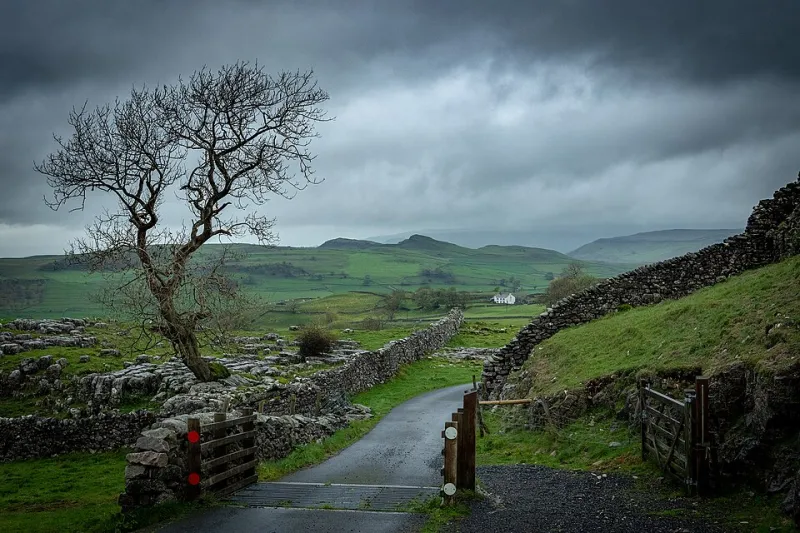
Photo: Jonty Sexton , CC BY-SA 2.0, via Wikimedia Commons
Buffering in the Dales: Why the People Who Inspire Our Best TV Can't Always Watch It
Picture the scene. A farmhouse in the Yorkshire Dales, stone walls, a proper view across the valley, the kind of landscape that television producers travel hundreds of miles to capture. Inside, someone is trying to watch a drama on a streaming platform. The drama was, in fact, filmed about four miles away. The connection drops. The wheel spins. The drama does not play.
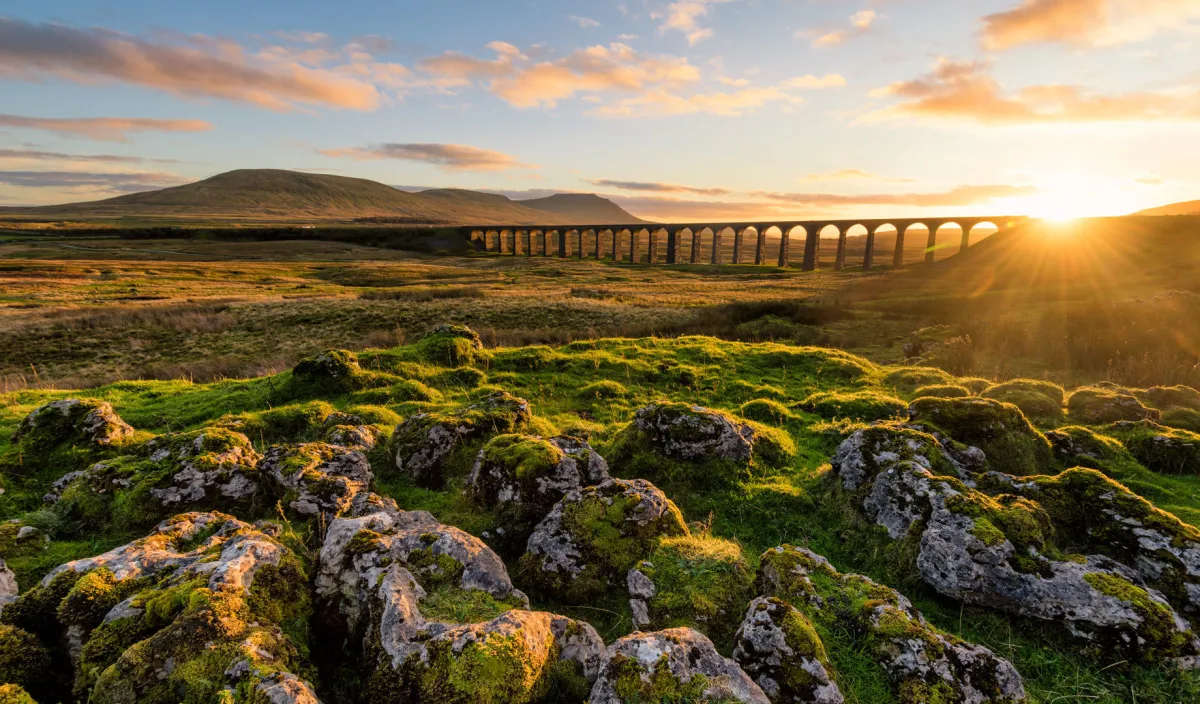 Photo: Yorkshire Dales, via www.nationalparks.uk
This is not a rare occurrence. It is, for a significant number of people living in rural Northern England, simply Tuesday.
The Irony at the Heart of It
There's something genuinely difficult to swallow about the digital divide affecting rural Northern communities when you consider what those communities provide to British television. The Dales, the Moors, the Northumberland coastline, the Lake District fells — these are not incidental backdrops. They are the landscapes that have shaped some of the most beloved programmes in British television history, from long-running dramas to wildlife documentaries to the kind of slow, atmospheric series that streaming platforms now commission in volume.
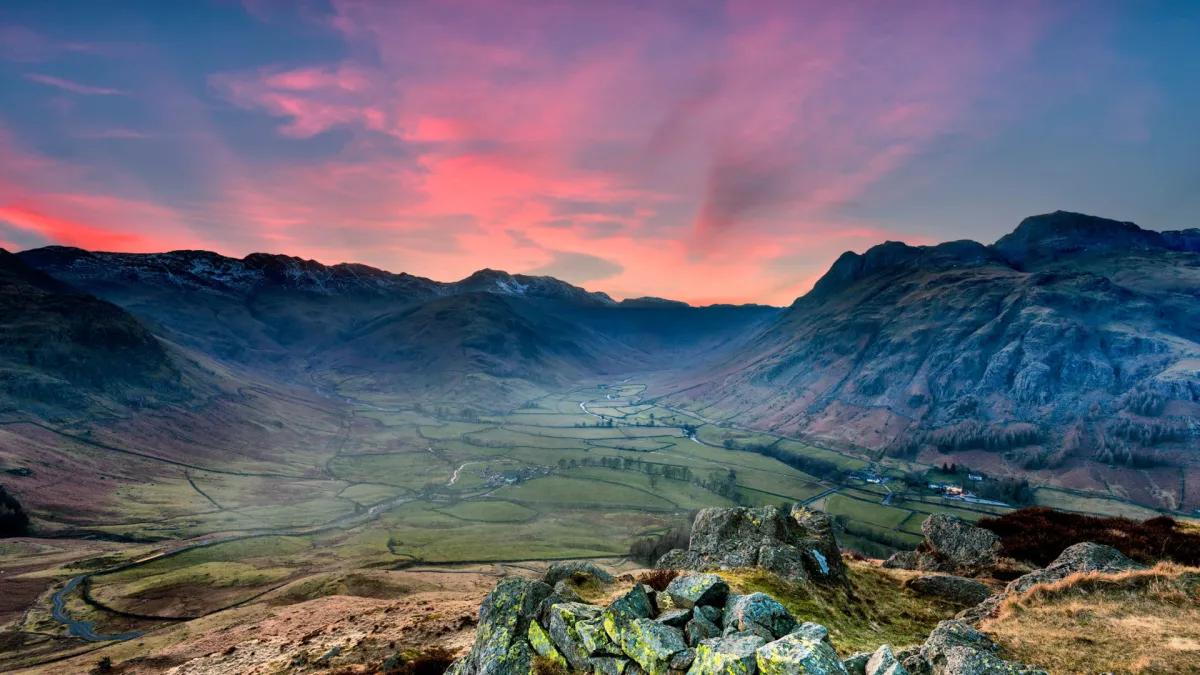 Photo: Lake District, via www.nationalparks.uk
The people who live and work in these places — the farmers, the village shopkeepers, the families who have been in the same dale for generations — are, in a very real sense, the inspiration for a significant portion of what Britain watches. And yet, when it comes to actually watching it themselves, they are frequently left behind.
Broadband connectivity in rural Northern England remains patchy at best and genuinely inadequate at worst. Ofcom's own data consistently shows that rural areas across Yorkshire, Cumbria, Northumberland and County Durham lag well behind urban centres in terms of reliable high-speed internet access. In an era when the BBC iPlayer, ITVX, Channel 4 and a growing roster of subscription streaming services have become the primary way millions of people consume television, that gap is no longer a minor inconvenience — it's a fundamental inequality in how people can participate in British cultural life.
What People Are Actually Dealing With
Speak to residents in affected areas and the frustrations are specific and consistent. Download speeds that make standard definition streaming unreliable, let alone the 4K content that platforms now offer as standard. Connections that collapse entirely during peak evening hours — the exact hours when most people want to sit down and watch something. Rural properties where the only option is a mobile data connection, subject to the whims of signal strength and monthly data caps.
"We're not asking for anything exotic," says one resident of a small village in the Yorkshire Dales, reached via a phone call that kept cutting out in a manner that rather proved her point. "We just want to watch the telly like everyone else. My daughter in Leeds can stream four things at once without thinking about it. I can't reliably watch one."
For older residents in particular, the shift toward streaming represents a genuine threat to cultural participation. The assumption built into modern broadcasting — that audiences have reliable broadband and can access catch-up and streaming services as a matter of course — excludes communities that have been waiting years for infrastructure investment that keeps not quite arriving.
What the Councils Say
Local authorities across rural Northern England are, to their credit, largely aware of the problem and largely frustrated by the pace of progress in addressing it. Councillors in North Yorkshire, Northumberland and Cumbria have been raising connectivity issues for years, and the government's Project Gigabit programme — designed to bring gigabit-capable broadband to hard-to-reach areas — has been welcomed in principle while drawing criticism for its slow rollout.
The challenge is partly financial and partly geographical. Running fibre infrastructure to isolated rural properties is expensive in a way that the economics of commercial broadband provision don't naturally support. The areas with the most pressing need are precisely the areas where the business case for investment is weakest.
"We've been promised improvements for so long that people have stopped believing it," one North Yorkshire councillor said bluntly at a recent public meeting on rural connectivity. "Every announcement gets a press release. The actual cables take years to follow."
Satellite broadband options, including services like Starlink, have provided a partial solution for some rural residents willing and able to pay the premium involved. But the cost remains prohibitive for many, and the expectation that individuals should fund their own workaround to a structural infrastructure failure sits poorly with communities that feel consistently overlooked.
What Broadcasters Think
The major British broadcasters are not entirely oblivious to this issue, though their responses vary in candour. The BBC, whose public service remit explicitly includes serving all audiences across the UK, has acknowledged the tension between its increasing reliance on iPlayer as a primary distribution platform and the reality that significant portions of its audience cannot reliably access it.
Some broadcasters have pointed to their continued commitment to traditional linear television — the broadcast signal that reaches aerial and satellite dishes regardless of broadband quality — as evidence that rural audiences are not being abandoned. But as commissioning increasingly prioritises streaming-first content, and as the prospect of linear broadcast switch-offs is discussed with growing seriousness in industry circles, that reassurance has a limited shelf life.
"The direction of travel is clear," says one media industry analyst who has written extensively on UK broadcasting policy. "Everything is moving toward streaming. If the infrastructure question in rural areas isn't resolved in parallel with that transition, you end up with a two-tier system where where you live determines what culture you can access. That's a serious problem for a public broadcaster in particular."
The View From the Valley
Back in the Dales, the frustration is real but it coexists with a certain dry Northern pragmatism. People have adapted — downloading content in advance when connections allow, maintaining satellite television subscriptions as a backup, occasionally driving to a family member's house in a town with decent broadband to catch up on something they've been waiting to watch.
But adaptation shouldn't be the answer. The people who live in these landscapes, who maintain the countryside that television celebrates so enthusiastically, who appear as background characters in the story Britain tells about itself — they deserve to be proper participants in that story, not just its picturesque backdrop.
The streaming revolution has genuinely transformed how Britain watches television. It's transformed production, distribution, and the relationship between audiences and content in ways that are largely positive. But a revolution that leaves rural Northern communities loading spinners and dropped connections isn't a complete revolution. It's a revolution with an asterisk.
And the people in the Dales, and the Moors, and the fells of Cumbria, are getting rather tired of being the asterisk.