Before the Cameras Roll: What Northern TV Guests Are Really Like When Nobody's Watching
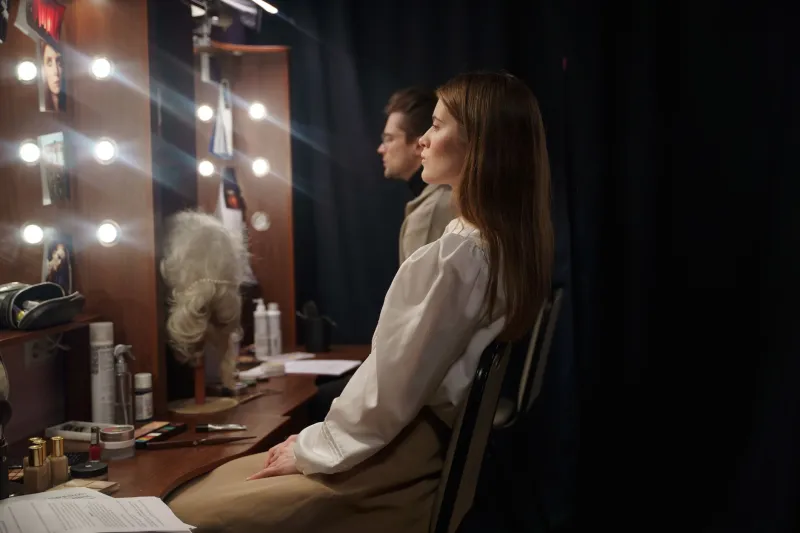
There's a moment, familiar to anyone who's ever worked in live television, that happens roughly forty-five minutes before broadcast. The green room fills up. The guests arrive. The pleasantries are exchanged. And then, gradually, as the reality of being on live telly begins to settle in, the masks slip — just a little — and you start to see who people actually are.
The green room is television's best-kept secret. Not because anything scandalous necessarily happens there (though sometimes it does), but because it's the one space in a TV studio where the performance hasn't started yet. Politicians become nervous. Comedians become quiet. Local celebrities who've been on the show twelve times become weirdly territorial about the biscuit selection. It's fascinating, and almost none of it ever makes it to air.
We spoke to a collection of producers, floor managers, runners, and the occasional guest from across Northern television's live circuit to piece together a portrait of what really goes on behind the set.
The Performer's Paradox
Here's the thing about people who appear on television: the ones who seem most relaxed on screen are frequently the most anxious off it. Multiple producers told us versions of the same story — the polished, confident presenter or celebrity who, thirty seconds before the floor manager calls them to set, is pacing, muttering, doing breathing exercises, or making increasingly frantic phone calls.
"There's a local politician who comes on our regional magazine show fairly regularly," says one producer from a Yorkshire-based programme who asked to remain unnamed. "On screen, she's completely at ease. Warm, funny, never flustered. Off screen, in the green room, she's an absolute whirlwind. Rearranging the furniture, asking for different lighting, wanting to know the exact wording of every question. Then the red light comes on and she transforms. It's like watching someone put on a superhero suit."
The inverse is equally common. Guests who seem wooden or uncomfortable on camera often turn out to be enormously entertaining company in the green room — funny, self-deprecating, full of stories they'd never tell with a microphone in front of them. More than one runner mentioned the particular sadness of watching a genuinely charismatic person freeze the moment the cameras pointed at them.
What Northern Live Telly Does to People
There's a specific pressure that comes with live regional television that's different from the national stuff. National shows have layers of protection — pre-records, editing, the comfort of a large team. Live Northern magazine programming is leaner, faster, and considerably less forgiving. When something goes wrong — and it does, regularly — it goes wrong in front of your neighbours.
"People underestimate how much that matters," says a former floor manager who worked on a long-running regional magazine programme. "On a national show, if you fluff a line, strangers see it. On a regional show, your mum sees it. Your old school friends see it. Your boss sees it. That changes how people behave in the green room beforehand."
Local guests — community figures, business owners, the woman who's just won a regional baking award — often arrive visibly terrified in a way that professional media performers don't. And there's something genuinely touching about watching the production team work to calm them down. Good runners and producers in Northern TV tend to be exceptionally good at this particular skill. It's not taught anywhere. You either have it or you don't.
The Celebrities Who Surprise You
Several people we spoke to were eager to share — anonymously, naturally — their most memorable green room encounters. The picture that emerges is not the one you'd expect from tabloid coverage.
A runner from a Manchester-based entertainment programme described a well-known comedian, famous for an abrasive public persona, who spent twenty minutes in the green room having a detailed, genuinely interested conversation with a local charity worker who was also a guest that day. "He was asking real questions. Taking notes, actually. Nobody was filming him. There was nothing to gain from it. He was just interested."
Conversely, a producer described a celebrity chef — one with a very warm public image — who arrived, demanded a specific brand of sparkling water that wasn't available, refused the substitute, and spent the entire green room period on their phone without acknowledging anyone. "Not rude exactly. Just completely absent. Like they'd sent a body double and kept the actual personality at home."
Politicians, almost universally, are described as more human in the green room than they appear on screen. Several people mentioned the specific phenomenon of watching a politician have a genuine, unguarded laugh about something — the kind of laugh that never happens in front of a camera — and thinking, briefly, that they might actually like them.
The Stories That Never Make Air
The most interesting green room stories, almost by definition, are the ones that stay there. The off-the-record confession. The unexpected vulnerability. The two guests who clearly know each other in a way nobody was expecting and spend the entire pre-show period in a pointed, loaded silence.
"Television is a very strange social situation," reflects one producer. "You're putting people together who often have nothing in common except the fact that they're all about to be on telly. And then you're watching them navigate that. It tells you a lot about who they are."
What the green room reveals, more than anything, is the gap between the version of a person that television creates and the actual human being underneath it. Sometimes that gap is small. Sometimes it's enormous. And occasionally — rarely, but memorably — the person you meet in the green room is so much more interesting than the one who walks out under the studio lights that you find yourself genuinely wishing the cameras had been pointing the other way.