Ink on the Page, Nowhere on the Screen: The Northern Scripts That Never Got Their Chance
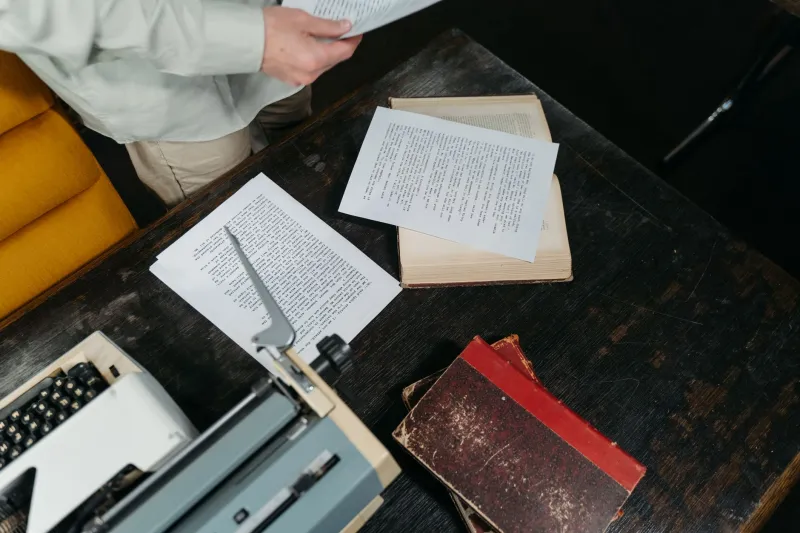
Every writer has a drawer. Not always a literal one — sometimes it's a folder buried on a laptop, a USB stick shoved in a kitchen junk drawer, or a stack of printed pages gathering dust in the spare room. For a significant number of Northern writers, that drawer holds scripts they genuinely believe in. Scripts that got close. Scripts that had champions, had interest, had a moment — and then, quietly, didn't.
This is a story about those scripts.
The One That Almost Was
Let's start with a near-miss that'll make you wince. A writer from Wakefield — who'd rather we didn't use his name, for reasons that'll become obvious — spent three years developing a six-part drama series set across a declining South Yorkshire steel community. Not a grim, misery-porn version of Northern life. Something warmer. Something with proper characters, dark comedy, and a real sense of place.
He had a production company attached. He had a broadcaster expressing "serious interest." He had a director who'd done solid work on a well-regarded BBC Two drama. And then a London-based commissioner, who'd never set foot north of Watford Gap, told him the setting "felt too niche for a national audience." The series was quietly shelved. Two years later, a drama with a remarkably similar emotional premise — set in the Home Counties — was commissioned, produced, and nominated for a BAFTA.
"I'm not bitter," he says, with a laugh that suggests he absolutely is, just a little. "I'm mostly just confused about what 'too niche' means when you're talking about communities that millions of people actually come from."
The Sitcom That Got Away
It's not just drama. Sitcom has its own graveyard of Northern ideas that never quite made it. A Manchester-based writer duo — both veterans of regional radio comedy — spent the better part of 2018 developing a sitcom pilot set in a Northern bingo hall. Think warm, chaotic, full of genuinely funny characters who happened to be over sixty. The kind of show that ITV used to make brilliantly and somehow forgot how to.
They got a pilot script commission. They wrote it. Notes came back suggesting the characters needed to be "more aspirational." They rewrote. More notes. Eventually, the commission quietly expired without a greenlight, and the duo moved on to other work. The bingo hall sitcom exists only as a script PDF they occasionally send each other on bad days, accompanied by a string of increasingly resigned emoji.
"The frustrating thing," one of them tells us, "is that the notes were never really about the quality of the writing. They were about whether the people commissioning it could see themselves in it. And they couldn't. Because they'd never been to a bingo hall in their lives."
Why Northern Stories Struggle to Find Backing
This is, awkwardly, a structural problem as much as a cultural one. The majority of commissioning decisions in British television are still made in London. That's not a conspiracy — it's just geography and history. But it does mean that scripts rooted in very specific Northern experiences often have to translate themselves for an audience that's really just one or two people in a glass-fronted office in W1.
Several writers we spoke to described the same phenomenon: the moment in a pitch meeting where you can see a commissioner's eyes glaze slightly, not because the idea is bad, but because the reference points aren't landing. Mention Holmfirth and you might get a nod — it's where Last of the Summer Wine was filmed, so it's safe. Mention Burnley, or Gateshead, or Scunthorpe, and you're suddenly doing geography homework.
"There's a version of the North that commissioners are comfortable with," says one producer who's worked extensively with Northern writers. "It's cobbles, flat caps, rain. Once you step outside that, you have to work twice as hard to get people to believe the story is universal. But it is universal. That's the whole bloody point."
The Ones That Are Still Waiting
Not every shelved script is dead. Some are merely sleeping. A Leeds-based writer who's had genuine success in children's television has spent the last four years quietly developing an adult drama about a Northern town dealing with the aftermath of a local factory closure — not through the lens of politics, but through five very different families. She's had interest from two streamers. Both times, development stalled.
"I keep being told the timing isn't right," she says. "I've been told that for four years. I'm starting to wonder if 'the timing isn't right' is just something people say when they mean 'we're not sure about this' but don't want to say it directly."
She's still working on it. Still believes in it. That's the thing about writers — the drawer doesn't mean the end. It just means waiting.
What Gets Lost When the Scripts Don't Get Made
Here's what nobody really talks about: when a Northern script doesn't get made, it's not just a writer who loses out. It's the story that doesn't get told. The community that doesn't see itself on screen. The kid growing up in Sunderland or Salford or Skipton who watches telly and wonders, quietly, why nobody seems to live anywhere like where they live.
That's not a small thing. Television shapes how we understand ourselves and each other. When whole regions are reduced to supporting characters in someone else's story, something real gets lost.
The drawer is full. The stories are there. The writers are ready. All they need is someone willing to actually open the door.