Proud and Loud: How Northern Accents Stopped Being a Problem and Started Being the Point
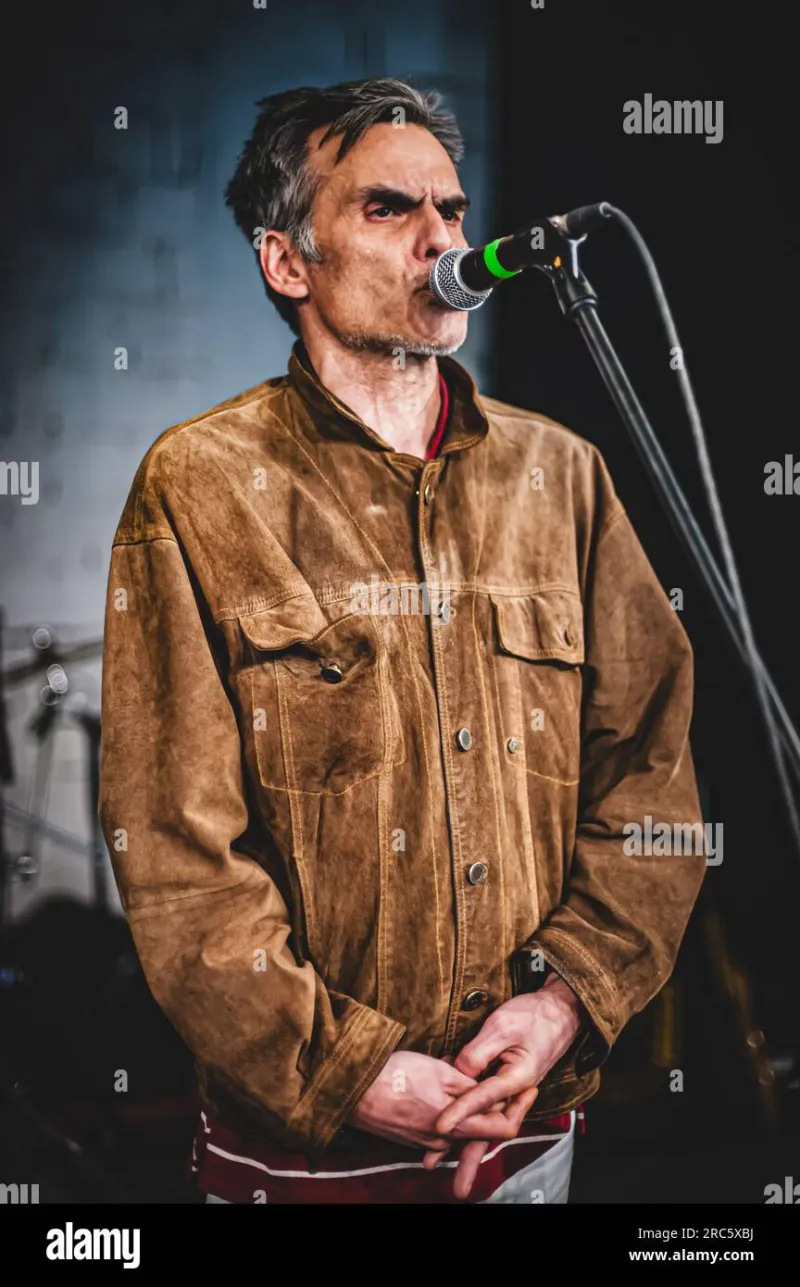
Photo: northern England actor speaking microphone authentic portrait, via c8.alamy.com
There's a moment that dialect coach Sandra Mellor describes from her early career that says everything about how things used to work. A young actor from Barnsley — talented, prepared, clearly destined for something — walked into a casting session in the mid-nineties and opened his mouth. The feedback came back quickly: lovely presence, shame about the vowels. He was offered elocution lessons as a condition of his contract.
That story would be almost unthinkable today. Or at least, it should be.
The relationship between Northern accents and British television has shifted so dramatically over the past twenty-odd years that it's easy to forget just how hostile the industry once was to anything that didn't sound vaguely like the Home Counties on a good day. What changed? Quite a lot, as it turns out — and the North itself deserves most of the credit.
The Bad Old Days of the Broadcasting Voice
For much of British television's history, a so-called 'Received Pronunciation' accent wasn't just preferred — it was practically mandatory for anything considered serious or prestigious. Regional voices, when they appeared at all, tended to be shorthand: the comic relief, the salt-of-the-earth working man, the loveable simpleton. Northern accents in particular carried a kind of cultural baggage that casting directors and commissioners seemed reluctant to unpack.
"There was this unspoken rule," says one veteran casting director who asked to remain anonymous. "If you wanted to be taken seriously in drama, you neutralised. You trained the edges off. A broad Yorkshire or Manchester accent was considered a ceiling, not a foundation."
This wasn't just about snobbery, though there was plenty of that. It was also about a broadcasting establishment that was almost entirely concentrated in London, populated by people whose understanding of Northern life came largely from stereotype. The result was a feedback loop: Northern characters written by Southern writers, cast with Southern actors doing approximations, then validated by Southern commissioners who didn't know any different.
The Turning Point
Ask people in the industry when things began to shift and you'll get a few different answers, but certain titles come up again and again. Shane Meadows' This Is England — raw, uncompromising, shot on location in the Midlands and North — arrived in 2006 like a bucket of cold water. Its characters sounded like actual human beings from actual places. The accents weren't decorations or jokes. They were the story.
Then came Peaky Blinders, which did something quietly radical: it took Birmingham's Brummie accent — arguably even more maligned than most Northern dialects — and placed it at the centre of a prestige drama that sold worldwide. If Cillian Murphy's Tommy Shelby could command that kind of global attention while sounding unmistakably regional, the argument for accent neutralisation started to look very thin indeed.
"Peaky Blinders gave a lot of people permission," says dialect coach Rachel Daines, who has worked with several Northern-born actors navigating the industry. "Not just actors, but commissioners and producers too. It proved the audience wasn't put off by regional voices. If anything, they were drawn to them."
What Authenticity Actually Sounds Like
The word authenticity gets thrown around a lot in television circles, sometimes to the point of meaninglessness. But when it comes to accents, it carries real weight. Audiences — particularly younger ones — have developed a remarkably sensitive ear for inauthenticity. A poorly executed Northern accent in an otherwise polished drama can pull viewers out of the moment entirely.
This has created an unexpected kind of power for Northern actors. Where once their voices were considered a limitation, they're now frequently an asset — particularly for the wave of regionally-set dramas that streaming platforms and broadcasters are hungry for. Shows set in Leeds, Liverpool, Newcastle or Sheffield need voices that actually belong there. And increasingly, the people making those casting decisions understand why it matters.
Actress Jodie Comer — a Liverpudlian who has spoken openly about being told early in her career to watch her accent — went on to play a Russian-accented assassin in Killing Eve while keeping her natural voice for interviews and press. The contrast wasn't lost on anyone. She didn't need to be anyone else to be extraordinary.
The Coaches Who Kept the Flame
It would be wrong to suggest that dialect coaches are now redundant in this new landscape. If anything, their work has become more nuanced. The job has shifted from "help this actor sound less Northern" to "help this actor sound specifically Northern in a way that's true to character and place."
There's a world of difference between a Geordie accent and a Teesside one. Between the rhythms of inner-city Manchester and the cadences of the rural Lancashire villages forty minutes away. Getting those details right matters enormously to local audiences — and to the growing number of commissioners who've come to understand that lazy regional generalisations are a fast route to bad reviews.
"I spend a lot of time now working with actors who are from the North but have spent years training or working in London and have unconsciously drifted," says Daines. "There's a kind of accent grief that happens. We work on reclaiming something they were told to let go of."
Where We Are Now
It would be dishonest to claim the battle is entirely won. There are still casting decisions that raise eyebrows, still moments when a Southern actor is dropped into a Northern role and the seams show. The industry's centre of gravity remains disproportionately London-based, and that shapes everything from which stories get commissioned to who gets asked to audition.
But the direction of travel is unmistakable. Northern voices are no longer something television apologises for. They're something it actively seeks out — because they bring with them a credibility, a specificity, and a warmth that no amount of elocution coaching can manufacture from scratch.
For the kid from Barnsley who was once offered lessons to sand down his vowels? Well. He'd probably do rather well today. The industry has finally started listening — and it turns out the North had something worth saying all along.