Lightning Doesn't Strike Twice: Why Northern TV Spin-Offs Keep Missing the Mark
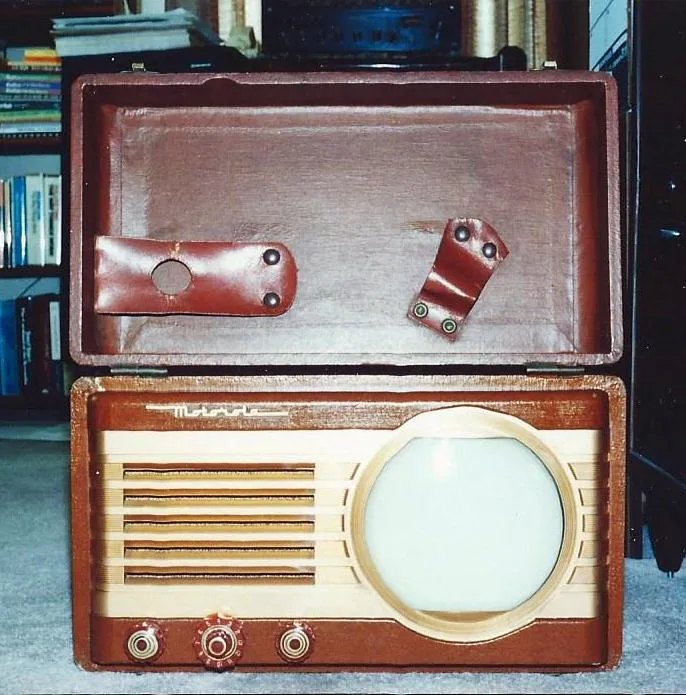
Photo: Joe Haupt from USA, CC BY-SA 2.0, via Wikimedia Commons
There's a particular kind of television disappointment that Northern audiences know well. It arrives wrapped in promise — a familiar logo, a returning face or two, the suggestion that the thing you loved is coming back in some form. And then, somewhere between the announcement and the third episode, the sinking feeling sets in. This isn't it. This is something that looks like it, sounds a bit like it, and has clearly cost a great deal of money to assemble. But it isn't it.
The history of British television is littered with spin-offs and reboots that failed to recapture the essence of their Northern originals. Some flopped quietly. Others were dispatched after a single series with the kind of brisk finality that suggests everyone involved had suspected the outcome for a while. A handful limped on, sustained by brand loyalty and a reluctance to admit defeat, before eventually being put out of their misery.
The question isn't why these projects get greenlit — that part is fairly straightforward, commercially speaking. The question is why they so consistently fail to do the one thing they were designed to do.
What Made the Original Actually Work
To understand why spin-offs stumble, it helps to understand what made the originals land in the first place — and that's rarely as simple as it appears in a post-hoc pitch document.
The Northern dramas and comedies that achieve genuine cultural resonance tend to do so through a combination of factors that are individually unremarkable and collectively almost impossible to replicate. A writer who knows a particular place from the inside. A cast that developed chemistry through years of shared history rather than a casting session. A production environment that, often through necessity rather than design, gave performers room to find something real.
Crucially, many of the most beloved Northern series were not immediate hits. They found their audiences gradually, built through word of mouth and repeat viewings, shaped by the kind of sustained creative commitment that the commissioning environment rarely allows for a second time around. The show you're trying to spin off from didn't feel like a guaranteed success when it started. It felt like a risk that paid off. And you can't manufacture the conditions for that kind of risk a second time.
The Nostalgia Trap
The most common mistake in Northern spin-off development is mistaking nostalgia for appetite. Audiences who loved an original series do not necessarily want more of it — they want to feel what they felt watching it. Those are very different things, and conflating them leads to projects that prioritise surface familiarity over genuine creative ambition.
Returning characters are deployed as shorthand for emotional connection, but without the context that made those characters meaningful in the first place, they tend to feel diminished rather than welcome. The setting gets recreated with increasing fidelity — the same streets, the same visual palette, sometimes literally the same corner shop — while the creative DNA that made the original feel alive goes unexamined.
"The mistake is always the same," says one television critic who has written extensively about Northern drama. "Someone looks at what the original had — the location, the cast, the title — and decides those are the ingredients. They're not the ingredients. They're the packaging. The ingredients are the things that are much harder to identify and almost impossible to transfer."
Case Studies in Careful Failure
The pattern shows up across genres and decades. Comedy spin-offs that took a beloved supporting character and built a new show around them, only to discover that the character's appeal was entirely dependent on the ensemble they'd been lifted from. Drama continuations that returned to a fictional Northern community years later and found that what had made it compelling — the specific social tensions of a specific moment — had been replaced by a generic version of itself.
In some cases, the spin-off actually had stronger individual components than the original — better production values, more experienced directors, a bigger budget. It made no difference. The audience could feel that something essential was missing, even if they couldn't have named it precisely.
What they were often responding to was the absence of necessity. The original series had been made because someone felt compelled to tell that particular story in that particular way. The spin-off had been made because the original had been successful. That distinction — invisible in a pitch document, obvious on screen — is almost impossible to fake.
What Would Actually Work
So is there a version of this that can succeed? Television history suggests yes, occasionally, under specific conditions.
The spin-offs and reboots that have worked — and there are a handful worth examining — tend to share certain characteristics. They approached the original material with genuine critical distance rather than reverential reproduction. They identified something in the source that hadn't been fully explored and built outward from that, rather than attempting to recreate what already existed. And they were driven by creative voices with a real connection to the world being depicted — not just an admiration for the show, but an understanding of the place and the people it came from.
Several television professionals who spoke to Up North TV pointed to the same basic principle: the question to ask when developing a spin-off isn't 'how do we give audiences more of what they loved?' It's 'what story from this world hasn't been told yet, and who is the right person to tell it?'
That's a harder question to answer, and the answer is less immediately commercially reassuring. But it's the question that leads to television worth watching, rather than television worth remembering you were disappointed by.
The North Deserves Better Than Its Own Echoes
There's something faintly dispiriting about the spin-off cycle when you look at it from a Northern perspective. The original shows that inspire these attempts are, almost by definition, works that captured something genuine about Northern life — its humour, its tensions, its particular way of holding things together. The spin-offs that follow tend to treat that genuineness as a commodity to be extracted and repackaged.
Northern audiences are not short of loyalty. They'll show up for a new series with a familiar name. They'll give it time, more time than it probably deserves in some cases, because they want it to work. But they'll also know, usually quite quickly, when what they're watching is a tribute act rather than the real thing.
The North has produced enough original television to fill a very long and very good evening's viewing. What it needs from its broadcasters isn't more attempts to replicate the past. It needs the same thing that produced those originals in the first place: the courage to back something new.