From Canvas to Camera: The Northern Artists Who Shaped the Look of British Telly Without Anyone Noticing
There's a shot you'll have seen a hundred times without ever quite registering why it works. A lone figure crossing a rain-slicked cobbled street, factory chimney stacks visible in the middle distance, the sky a particular shade of pewter that somehow manages to feel both oppressive and beautiful. It's a shot that appears across decades of British television drama — in the gritty social realism of the 1960s, in the kitchen-sink adaptations of the 1970s, in contemporary crime dramas filmed on location across the North of England.
Where does that image come from? The honest answer is: it comes from a tradition of Northern art that predates television by the better part of a century.
The Lowry Effect
L.S. Lowry is the obvious starting point, though he's also the one most at risk of being reduced to shorthand. The Salford-born painter spent decades documenting the industrial landscape of the North West in a style so distinctive that it became a cultural reference point far beyond the art world. His flattened perspectives, his crowds of anonymous figures, his factories rendered in cool greys and off-whites — these were not just aesthetic choices. They were a way of seeing a particular kind of life.
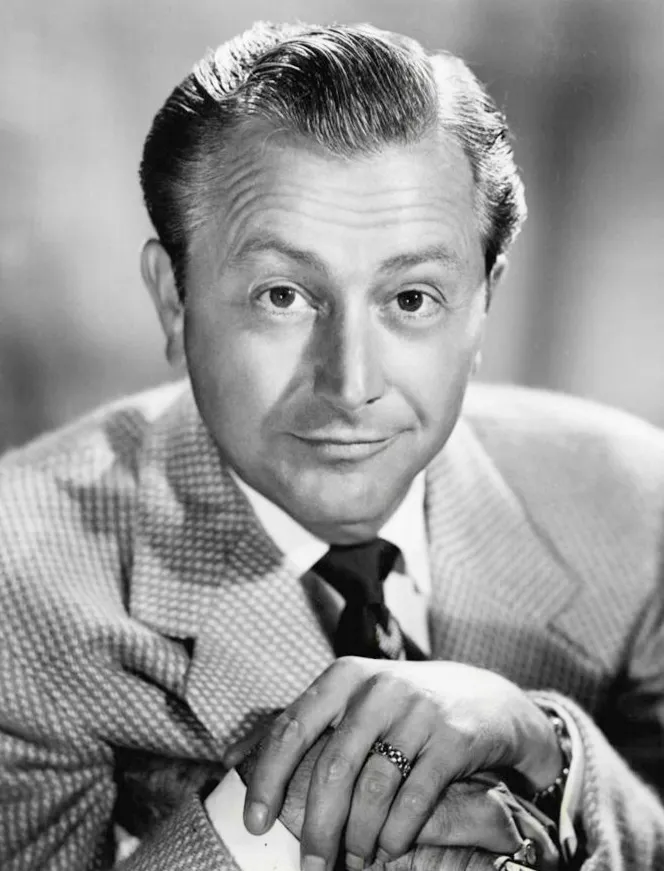
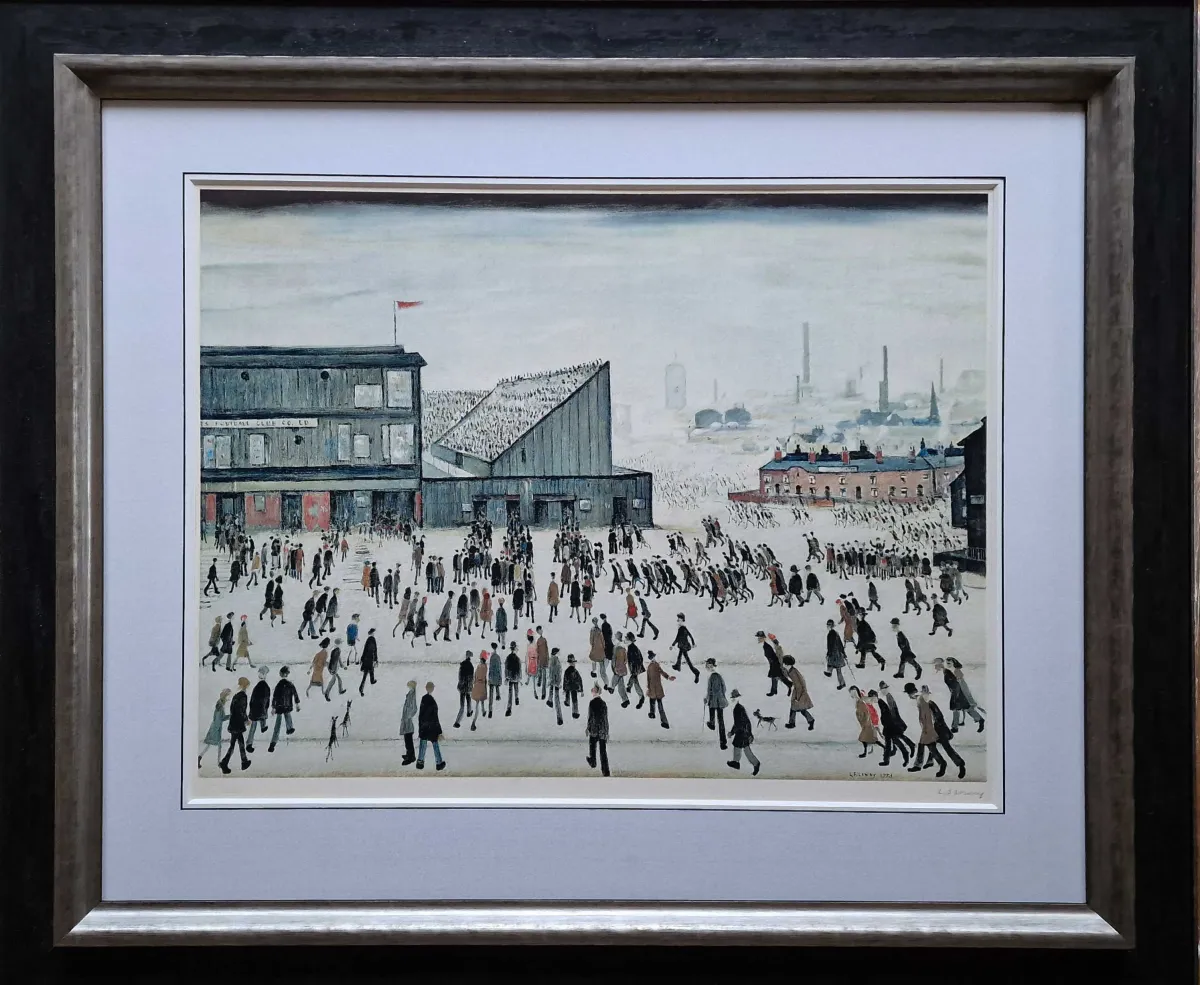 Photo: L.S. Lowry, via www.lowry.co.uk
Production designers who came up through British television in the 1970s and 1980s have spoken in various interviews over the years about the extent to which Lowry's visual language informed their thinking. Not necessarily consciously, not necessarily through direct reference — but it was in the air. It was what the North looked like, in the collective imagination, and when you were tasked with creating a believable Northern world on screen, you drew on what already existed.
Cinematographers working on early Granada productions — the company that arguably did more than any other to establish a distinctly Northern visual grammar for British television — have described a similar process. The light in Lowry's paintings, that particular quality of Northern industrial daylight, was something they actively tried to replicate. Diffuse, slightly flat, without the harsh shadows that Mediterranean-influenced visual traditions favoured. It was the light of overcast skies and terraced streets, and it required a different approach to exposure and contrast than the conventions of the time suggested.
The Staithes Group and the Rugged Coast
Move north and east from Salford and a different tradition comes into focus. The Staithes Group, a loose collective of artists who gathered around the North Yorkshire fishing village from the 1880s onward, developed a visual approach rooted in the drama of coastal working life — fishing boats, harbour walls, women mending nets against a backdrop of cliffs and breaking waves.
The influence of this tradition on British television is less immediately obvious than Lowry's, but it's there. The way certain productions frame the North Yorkshire coast — the particular emphasis on human figures dwarfed by landscape, the attention to weather as a dramatic element rather than a backdrop — owes something to how those painters taught audiences to see that stretch of coastline.
Art historians who've looked at this connection tend to make an important distinction: the influence rarely travels through conscious homage. Instead, it works through a kind of cultural osmosis. The paintings become part of how a place is imagined and remembered. When a director or a cinematographer arrives on location, they bring those images with them, embedded in their visual memory, and the choices they make are shaped accordingly.
The Hepworth Inheritance
Yorkshire's contribution to British visual culture extends well beyond landscape painting. The sculptural tradition associated with Henry Moore and Barbara Hepworth — both Yorkshire-born — introduced a particular sensibility around form, negative space, and the relationship between objects and their environment that filtered, in unexpected ways, into television's approach to set design.
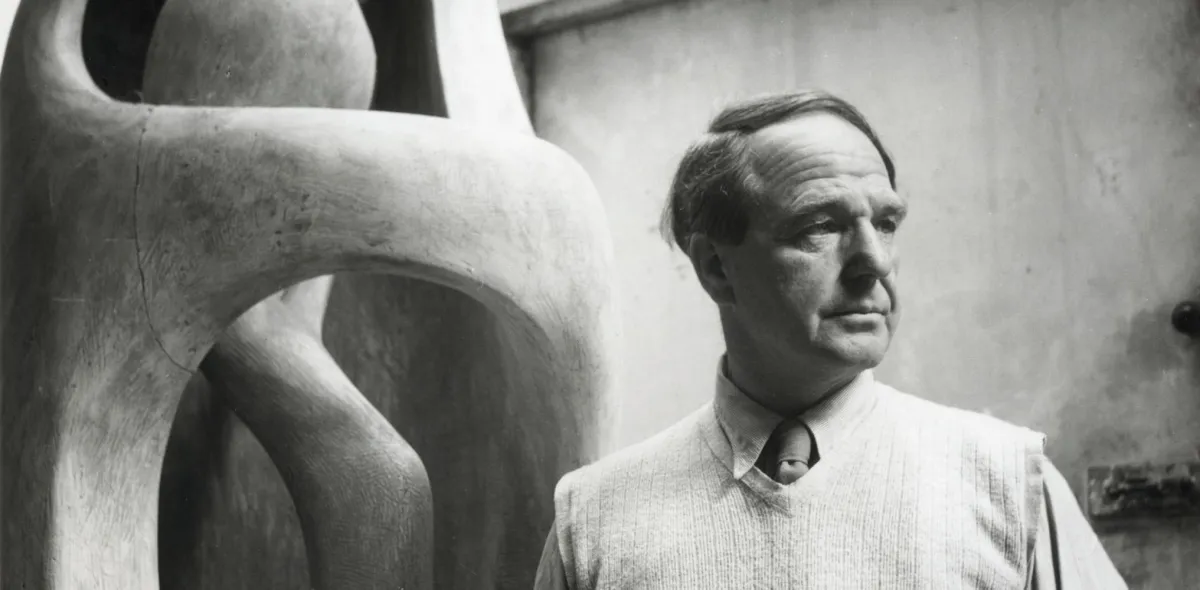 Photo: Henry Moore, via www.marklittler.com
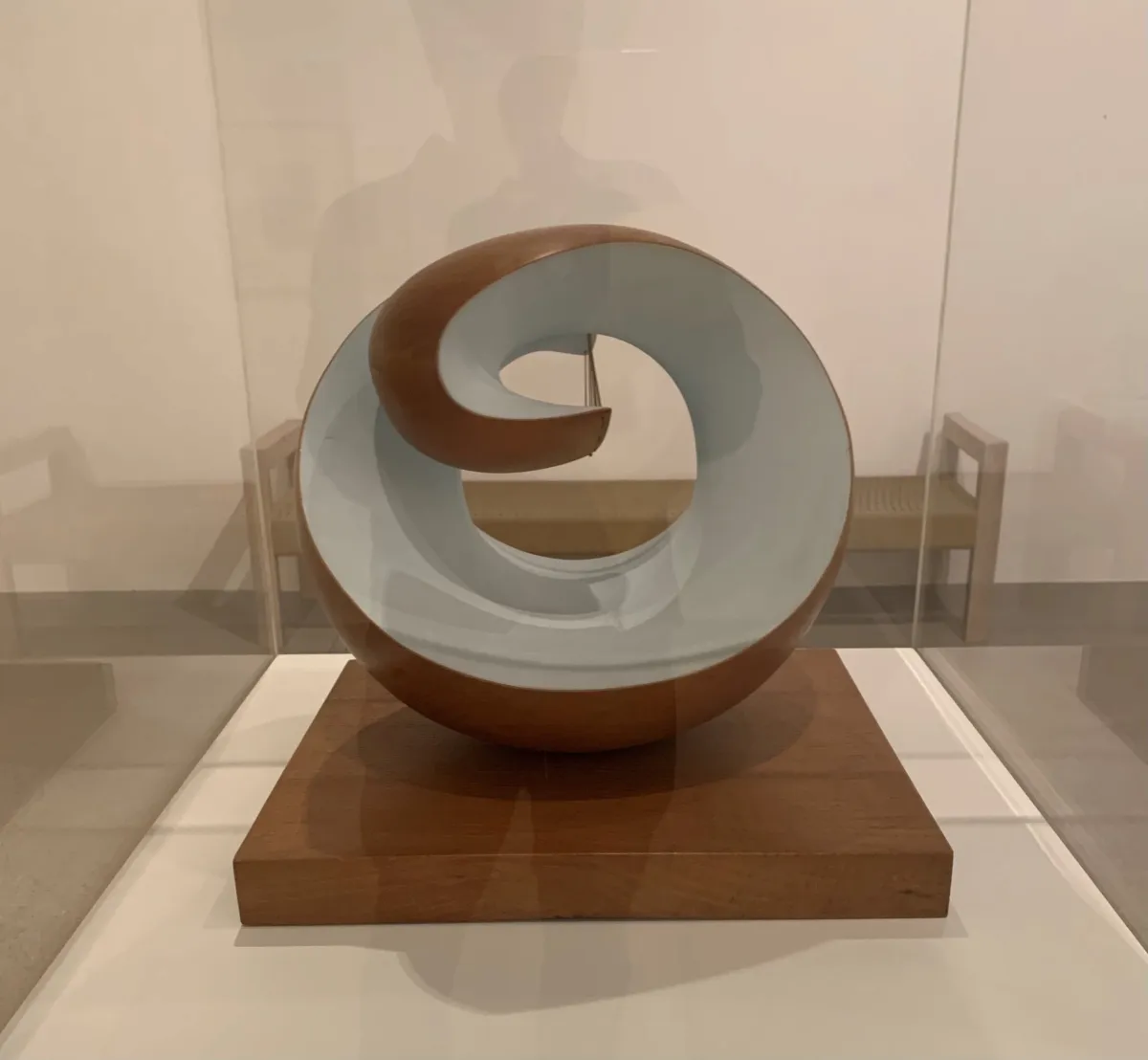 Photo: Barbara Hepworth, via artlogic-res.cloudinary.com
This is territory where the connections become more speculative, but the conversations are worth having. Production designers who trained in the North during the 1960s and 1970s were educated in art schools where Moore and Hepworth were touchstone figures. The emphasis on three-dimensional thinking, on how objects occupy and define space, on the expressive potential of texture and mass — these ideas didn't stay in the sculpture department. They migrated into how sets were conceived and built.
One veteran production designer, who worked on some of the most celebrated Northern dramas of the 1980s, once described Hepworth's work as "teaching you to think about what you leave out, not just what you put in." That's as good a description of restrained, effective set design as you're likely to find.
Painting the Working Class
There's a political dimension to this story that's worth acknowledging. Northern art — particularly the tradition running from the social realism of the early twentieth century through the kitchen-sink painters of the postwar decades — was frequently art made about and for working-class communities. It was documentation as much as aesthetic expression. It insisted that ordinary Northern lives were worth looking at carefully.
That insistence travelled into television. The commitment to depicting working-class Northern life with specificity and dignity — rather than as comic relief or as sociological curiosity — that characterised the best of British television drama from the 1960s onward drew on the same wellspring. The painters had established that these lives, these streets, these faces were worthy subjects. The television makers inherited that argument and ran with it.
A Living Conversation
What's particularly striking, speaking to contemporary cinematographers and production designers working on Northern-set productions today, is that this isn't purely a historical relationship. The conversation between Northern visual art and Northern television production is ongoing.
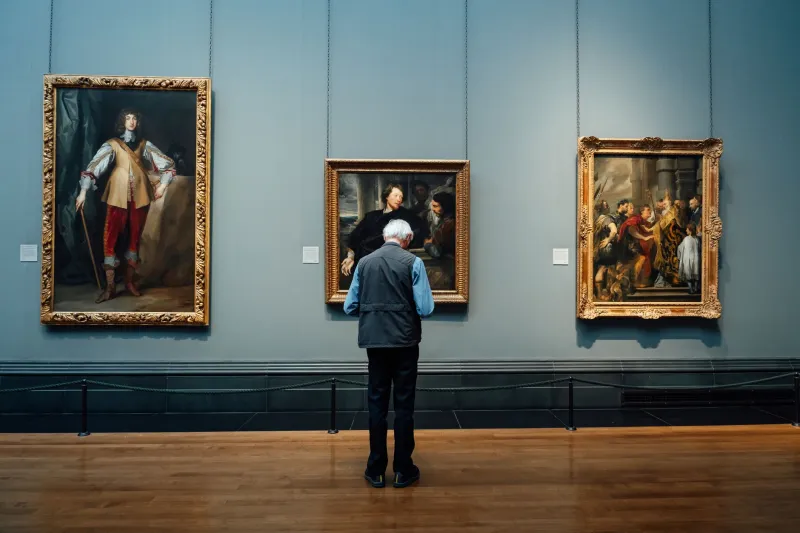
Several working cinematographers describe visiting galleries — the Lowry in Salford, the Hepworth Wakefield, the Staithes Arts Festival — as a regular part of their professional practice, not as a leisure activity separate from their work. Looking at how painters solved the problem of depicting Northern light, Northern space, Northern atmosphere provides a reference library that no amount of looking at other films and television quite replicates.
The canvas and the camera are different tools, working in different dimensions, for different purposes. But in the North of England, they've been in quiet conversation for well over a century. And the telly we watch — the stuff that feels most unmistakably, irreducibly Northern — carries that conversation in every frame.