Grown Up and Moving On: What Really Happened to the North's Most Famous Child Actors
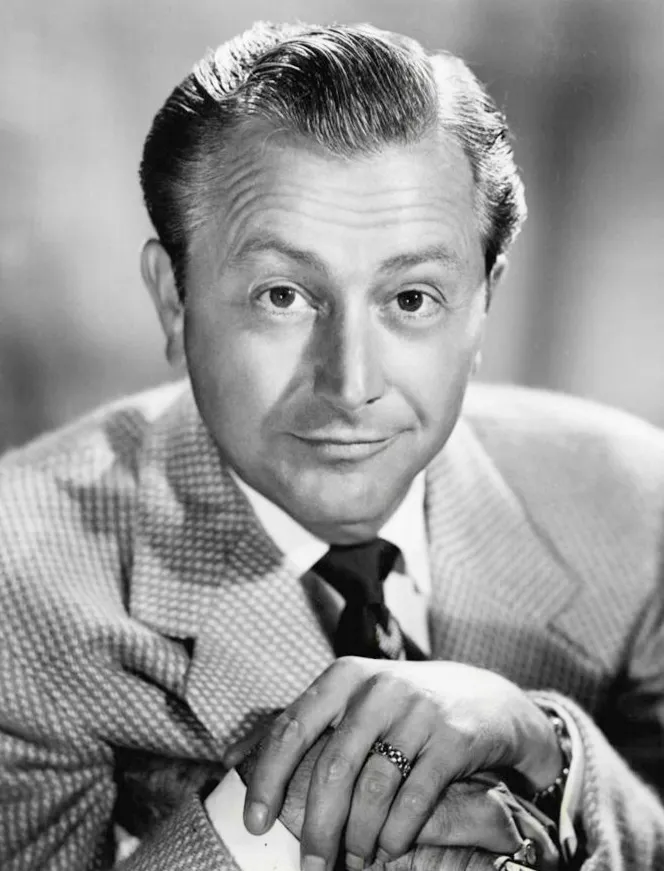
Photo: NBC Television, Public domain, via Wikimedia Commons
Grown Up and Moving On: What Really Happened to the North's Most Famous Child Actors
There's a particular kind of British television nostalgia that centres entirely on young faces. The kid who played the cheeky schoolmate. The teenager who anchored a drama about a troubled family on a Northern estate. The child actor who delivered a single devastating scene and then, seemingly, vanished from the face of the earth.
For audiences across the North of England, these weren't just characters — they were neighbours, in a sense. Familiar faces from streets that looked like your street, speaking in accents that sounded like your accent. And when they grew up, or when the cameras moved on, the question of what happened to them became genuinely personal.
Starting Young in the North
The North has always produced child acting talent in remarkable quantities, partly because of the sheer volume of television production based in the region, and partly because of a cultural tradition of youth performance that runs through everything from amateur dramatics to school productions.
For many young Northern actors, the path into television began through local theatre groups, school showcases, or simply through a parent who spotted a casting call in the local paper. The infrastructure of Northern television — particularly the long-running soap productions and the drama departments that have historically been based in Manchester and Leeds — created a steady demand for young local talent that continues today.
But entering that world as a child, and navigating it into adulthood, is a journey that looks very different depending on who you ask.
The Ones Who Stayed
For some young Northern actors, childhood fame turned out to be the beginning of a genuine career rather than its entirety. The transition from child performer to adult actor is notoriously difficult — the industry's appetite for a twelve-year-old playing a twelve-year-old does not automatically translate into enthusiasm for that same person at twenty-two — but the North has produced some notable success stories.
Several actors who began their careers as children in Coronation Street or Emmerdale have gone on to build substantial careers in British television and theatre. The training ground of a long-running soap, with its relentless production schedule and professional environment, turns out to be genuinely useful preparation for an adult career — even if the transition requires navigating a period of near-invisibility between the childhood role and whatever comes next.
 Photo: Coronation Street, via metro.co.uk
"The soap was like a school for me, honestly," one former child actor, now working steadily in theatre across the North, told a regional arts publication a few years back. "I learned more about timing and how to take direction in two years on that set than I could have learned anywhere else. The fact that I was twelve when I learned it just meant I had a head start."
The Ones Who Walked Away
Not everyone who starts in television as a child wants to continue in it as an adult. And in the North, where the pull of ordinary life — family, community, a career that doesn't involve auditions and rejection — is strong, the decision to step away from the industry is perhaps more common than it is among child actors from other parts of the country.
Some former child actors from beloved Northern dramas have gone on to careers that have nothing to do with performance. Teaching, nursing, trades, small businesses — the full spectrum of working life that television rarely depicts but the North knows well. And by most accounts, many of them are entirely content with that.
There's something worth examining in the assumption that walking away from a television career represents some kind of failure or waste of potential. For a significant number of people who appeared on screen as children, the experience was positive but finite — a chapter, not a calling. The North's no-nonsense cultural temperament arguably makes it easier to reach that conclusion without excessive drama.
Growing Up in Public: The Complicated Bit
For child actors who appeared in productions that have since become cultural touchstones — the kind of shows that live on in streaming libraries and repeat schedules — there's a particular experience of having your childhood preserved on screen in a way that most people's isn't.
The twelve-year-old version of you, perpetually available, performing scenes you may or may not remember filming, watched by strangers who feel they know you from that performance alone. It's a strange kind of fame — residual, frozen in time, occasionally resurfacing when a show gets a new streaming deal or a retrospective documentary.
"People still come up to me and quote lines," one former child actor from a well-regarded Northern drama series said in a podcast interview several years ago. "And I'm in my thirties. It's lovely, genuinely. But it's also a bit like being reminded of your school photos constantly. You were that person. You're not that person anymore."
Unexpected Second Acts
Some of the most interesting stories belong to former Northern child actors who found their way back to the entertainment industry — but through completely unexpected doors.
Behind-the-camera roles have attracted several people who began their careers in front of the lens. The experience of being on set from a young age, watching directors and producers work, absorbing the mechanics of television production — it turns out to be useful knowledge. Former child actors working as producers, casting directors, and drama teachers are more common than the general public might realise.
Others have found audiences through entirely new platforms. Social media, podcasting, and YouTube have created routes back into public life that didn't exist when many of these performers were first on screen. The nostalgia economy — the appetite for content about beloved old shows — has given some former child actors a new kind of relevance as commentators on their own histories.
What It Actually Means
Asking what happened to the North's child stars is, in some ways, asking what happened to childhood itself — how the experiences we have when we're young shape the people we become, and whether the unusual experience of being publicly visible during those years leaves a mark that's fundamentally different from any other kind of growing up.
The honest answer, based on the range of paths taken by people who started their careers in Northern television as children, is that there's no single story. Some found it the making of them. Some found it a distraction from what they actually wanted. Some are still working through what it meant.
What they share, broadly, is the North itself — the sense of place, the particular kind of groundedness that comes from growing up in communities where celebrity is viewed with healthy scepticism and getting on with things is considered a virtue. Whatever the cameras captured of them, the North made them. And that, it seems, tends to stick.