Soldering Irons and Screen Legends: The Backstreet Fixers Keeping Northern TV History Alive
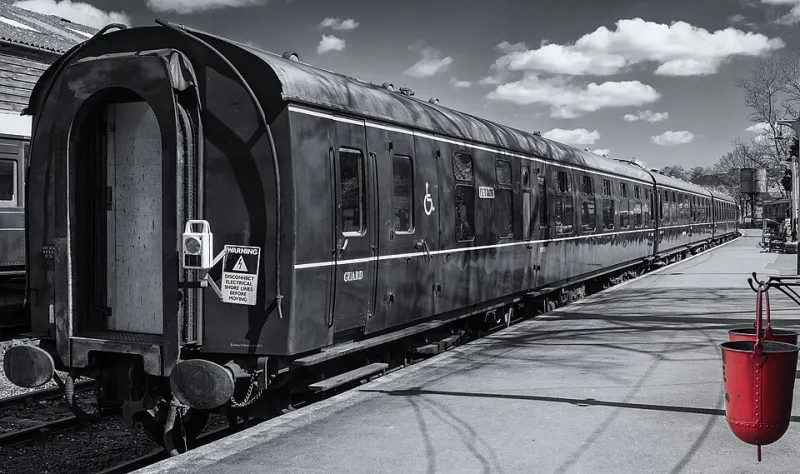
Photo: Ray in Manila, CC BY 2.0, via Wikimedia Commons
The first thing you notice, walking into Geoff's workshop in a converted outbuilding behind a row of terraced houses in Huddersfield, is the smell. Warm electronics. Old bakelite. A faint trace of soldering flux that seems to have soaked permanently into the walls. The second thing you notice is the sheer volume of stuff. Cameras on shelves. Monitors stacked carefully on wooden pallets. Circuit boards laid out on workbenches with the precision of a surgeon's tools. And everywhere, handwritten labels in biro — dates, model numbers, provenance notes.
"That one," says Geoff, pointing to a large, battered studio camera in the corner, "was used at a Granada facility in the early 1980s. I can't prove which programmes specifically, but the engineer I bought it from had worked there for twenty years. He knew what it had seen."
Geoff is 67. He worked in broadcast engineering for most of his career. Now retired, he spends his days doing what he always did, but without the deadlines and with considerably more interesting equipment.
What Gets Thrown Away
British television's relationship with its own physical history has been, to put it charitably, casual. Studios upgrade. Equipment becomes obsolete. The logistics of storing large, heavy, specialist hardware are considerable, and institutions under financial pressure don't tend to prioritise the preservation of cameras that stopped being used before some of their current staff were born.
The result is that an enormous amount of broadcast history has ended up in skips, in house clearances, in the hands of dealers who didn't fully understand what they were selling. Some of it has made it to museums — the National Science and Media Museum in Bradford has a genuinely impressive collection — but the volume of material that slipped through official channels is substantial.
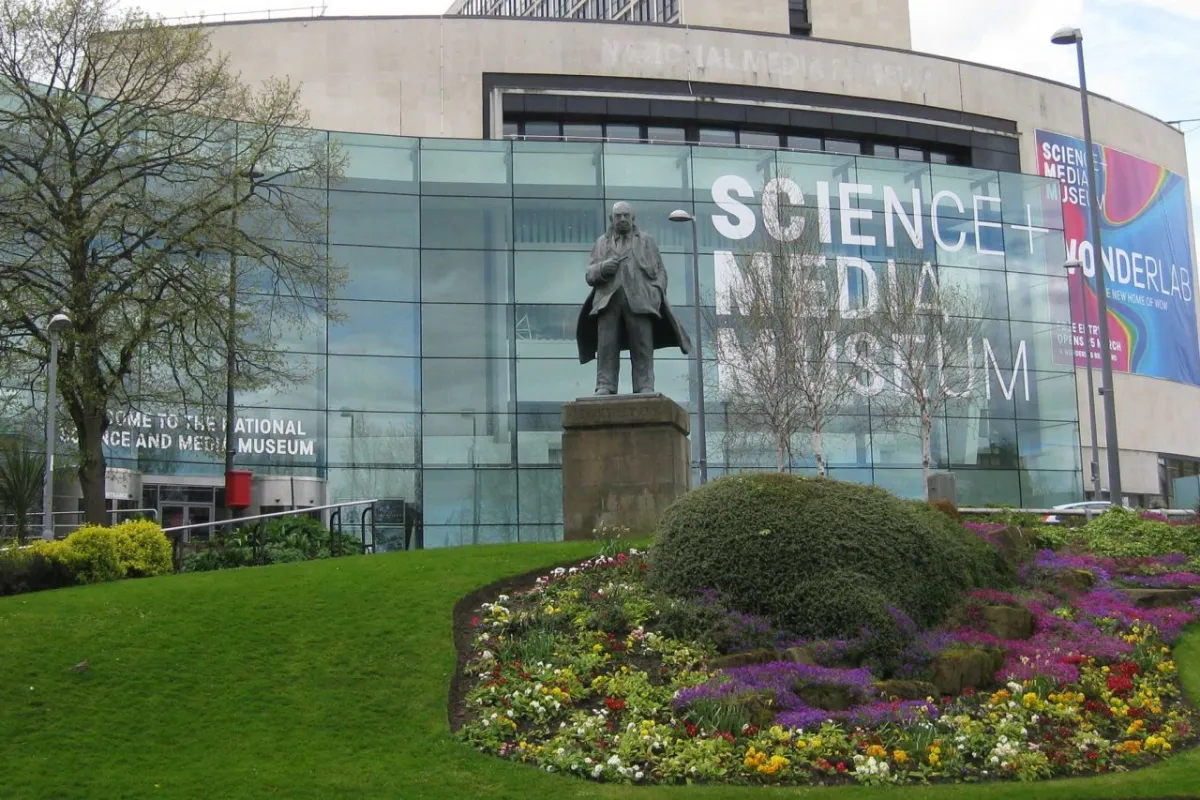 Photo: National Science and Media Museum, via englandrover.com
Which is where people like Geoff come in. And Pauline in Hartlepool. And brothers Dave and Steve who run a small electrical repair business in Halifax that has gradually, over twenty years, accumulated a back room full of vintage broadcast equipment that they restore on evenings and weekends, purely because they can't bear to see it in a state of disrepair.
The Stories in the Components
What distinguishes this community from ordinary vintage electronics collectors is the depth of knowledge they bring to their work. These aren't people who stumbled across an old camera at a car boot sale and thought it looked interesting. Most of them have professional backgrounds in broadcast engineering, electronics repair, or related technical fields. They understand what they're handling in a way that goes beyond aesthetics.
Dave, who trained as an electronics engineer and spent fifteen years working for a regional ITV franchise before redundancy led him back to the family repair business, can look at a piece of equipment and reconstruct a significant portion of its working life from the physical evidence alone. Wear patterns on controls. Modifications made in the field. Replacement components that indicate a particular kind of fault that was common in a specific era of broadcasting.
"Every piece of kit tells you something," he says, turning over a small broadcast monitor whose casing has been repaired with what appears to be industrial tape. "This was bodged in a hurry, probably on location. Someone needed it to keep working and they didn't have the right parts. That's a real moment. That's somebody's working day, decades ago, preserved in gaffer tape."
The stories that attach themselves to equipment are part of what drives the restoration work. A camera that can be traced back to a specific production. A monitor that sat in a gallery during programmes that millions of people remember. The provenance isn't always verifiable, but when it is, it transforms an object from a technical curiosity into something genuinely historical.
The Bradford Connection
It would be remiss to discuss the preservation of Northern broadcast history without acknowledging the National Science and Media Museum in Bradford, which has done more than any other institution to formally document and display the region's television heritage. Several of the independent restorers we spoke to have donated equipment to the museum or collaborated with its curators on specific projects.
But the museum's collection, impressive as it is, represents a fraction of what exists in private hands across the North. The informal network of restorers and collectors holds equipment, documentation and institutional knowledge that hasn't been formally catalogued anywhere. It's a shadow archive, operating quietly in garages and workshops, sustained entirely by personal passion.
Pauline, who restores vintage domestic television sets as well as broadcast equipment, has been trying for several years to establish a more formal connection between private collectors and regional museums. "The knowledge is going to die with us if we don't do something," she says, matter-of-factly. "I'm not being dramatic. The people who actually worked with this equipment, who know what it was used for and how it behaved — we're getting older. When we go, that living knowledge goes with us unless someone writes it down."
The Craft Itself
Beyond the historical dimension, there's something worth dwelling on in the sheer technical skill that restoration requires. Modern electronics are largely designed to be replaced rather than repaired — a philosophy that makes economic sense but produces a culture of disposability that these technicians find genuinely troubling.
Vintage broadcast equipment, by contrast, was built to be maintained. The components are accessible. The circuitry, while complex, operates according to principles that a skilled engineer can understand and work with. Restoring it requires patience, expertise, and a willingness to track down components that haven't been manufactured for forty years.
Geoff sources parts from suppliers across Europe, from other collectors who have cannibalised beyond-repair equipment for usable components, and occasionally from manufacturers' old stock that surfaces in unlikely places. "I found a batch of capacitors last year that were exactly what I needed for a 1970s camera," he says. "They were in a box in a warehouse in Belgium. The company that made them folded in 1989. The box had just sat there."
There's a particular satisfaction in these small victories that seems to sustain the community through the considerable frustrations of the work. Equipment that arrives in apparently terminal condition. Parts that simply don't exist anymore. The moment when something that hasn't functioned in thirty years produces a picture again — and it still works.
Something Worth Saving
British television, particularly in the North, produced work of genuine cultural significance across decades when the industry was still figuring out what it could be. The physical apparatus of that production — the cameras, the monitors, the mixing desks and signal processors — is a material record of how that work was made.
Museums preserve the finished product when they can. These backstreet technicians are preserving the means of production. It's a different kind of history, and in some ways a more honest one. The camera doesn't know it was pointed at something important. It just did its job. And now, in a workshop in Huddersfield or a garage in Halifax, somebody is making sure it keeps doing it.