The Adrenaline Artists: Meet the Northern Daredevils Making TV's Most Heart-Stopping Moments
When the Director Shouts 'Action'
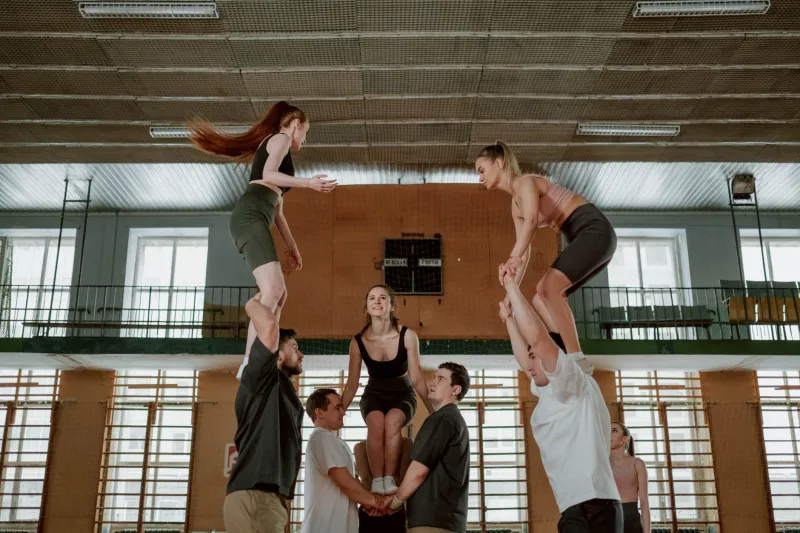
The warehouse in Salford looks ordinary enough from the outside, but step through the doors and you're entering a world where the impossible becomes routine. Crash mats are stacked like giant sandwiches, harnesses hang from industrial beams, and the air carries the scent of burning rubber from yesterday's car chase rehearsal.
This is the domain of Northern England's stunt coordinators – the adrenaline artists who've turned the region into Britain's unofficial action capital. While London might host the glitzy premieres, it's up here where the real magic happens: in converted mills, disused factories, and purpose-built training facilities where ordinary mortals learn to fall off buildings for a living.
The Family Business of Flying Bodies
"My dad taught me how to take a punch before I could properly ride a bike," laughs Sarah McKenzie, whose Hull-based stunt team has worked on everything from 'Happy Valley' to 'Line of Duty'. The 42-year-old coordinator represents the third generation of her family in the business, following in the footsteps of her grandfather who doubled for extras in 1960s war films shot around the Yorkshire Dales.
 Photo: Yorkshire Dales, via forum.amateurpin.xxx
 Photo: Sarah McKenzie, via mapy.net.pl
This generational handover is typical of the Northern stunt scene. Unlike their Southern counterparts who often come from drama schools or gymnastics backgrounds, Northern stunt performers frequently emerge from working-class families where physical graft and calculated risk-taking are part of the DNA.
"We've got lads whose granddads worked the steelworks, whose dads were on the rigs, and now they're throwing themselves off multi-storey car parks for 'Coronation Street'," explains Tommy Walsh, a Middlesbrough-based coordinator who's been in the game for over two decades. "It's honest work with honest people – and we look after our own."
From Pit Villages to Prime Time
The roots of Northern England's stunt community trace back to the region's industrial heritage. Former miners, steelworkers, and shipbuilders brought a unique combination of fearlessness and technical precision to the craft. They understood machinery, respected safety protocols, and possessed the kind of unflappable temperament that comes from working in genuinely dangerous environments.
"These weren't people looking for fame or fortune," notes film historian Dr. Janet Cromwell from Sheffield Hallam University. "They were skilled tradesmen who happened to be brilliant at making fictional violence look convincingly real."
 Photo: Sheffield Hallam University, via grannypornpics.org
This pragmatic approach has given Northern stunt teams a reputation for reliability that's attracted productions from across the UK. When 'Peaky Blinders' needed someone to coordinate a spectacular train derailment sequence, they called Leeds. When 'The Crown' required a car crash that would make viewers gasp without actually endangering anyone, they headed to Manchester.
The Streaming Revolution Changes Everything
The explosion of streaming platforms has transformed the landscape for Northern stunt coordinators. Suddenly, productions that once might have settled for implied violence or quick cutaways are demanding cinema-quality action sequences.
"Netflix money changed the game completely," admits Rachel Torres, whose Manchester team worked on the recent success 'Stay Close'. "We're not just doing the odd scuffle in the Rovers Return anymore – we're orchestrating full-scale action sequences that wouldn't look out of place in a Hollywood blockbuster."
This elevation has brought new challenges. Coordinators who once worked with modest budgets and practical effects now find themselves managing complex wire work, controlled explosions, and elaborate fight choreography. The learning curve has been steep, but Northern pragmatism has prevailed.
The Unsung Heroes Behind the Headlines
Despite their crucial role, stunt coordinators rarely receive the recognition afforded to other television professionals. While actors and directors collect BAFTAs, the people who make their most memorable moments possible remain largely anonymous.
"We're fine with that," insists Walsh. "We're not in it for the red carpets. But it would be nice if people understood the skill involved. When you see someone fall down stairs on telly, that's not an accident – that's months of planning and years of training."
The technical expertise required is staggering. A single fight scene might involve weeks of rehearsal, detailed storyboarding, and consultation with medical professionals to ensure every punch lands safely. Car chases require coordination between drivers, camera operators, and safety crews, all working to split-second timing.
Training the Next Generation
As demand for their services grows, Northern stunt coordinators are grappling with succession planning. The informal apprenticeship system that has sustained the industry for decades is struggling to keep pace with the volume of work streaming platforms are commissioning.
"We need proper training facilities, proper courses, proper recognition," argues McKenzie. "The lads coming through now need to understand not just how to fall safely, but how to work with green screens, how to coordinate with CGI teams, how to make modern television magic."
Several coordinators are now working with Northern colleges to develop formal qualifications. The goal is to preserve the region's reputation for producing fearless, reliable stunt professionals while ensuring they're equipped for an increasingly sophisticated industry.
The Future of Falling
As British television continues its global expansion, Northern stunt coordinators find themselves at the centre of an unexpected boom. Their combination of technical skill, budget consciousness, and unflappable professionalism has made them indispensable to productions seeking authentic action without Hollywood price tags.
"We might not have the sunshine, but we've got something better," concludes Torres with a grin. "We've got people who'll throw themselves off a building in the rain, make it look brilliant, and still have time for a brew afterwards. Try getting that in Los Angeles."