Priced Out of the Picture: The Northern Towns That TV Made Famous Are Losing Their Close-Up
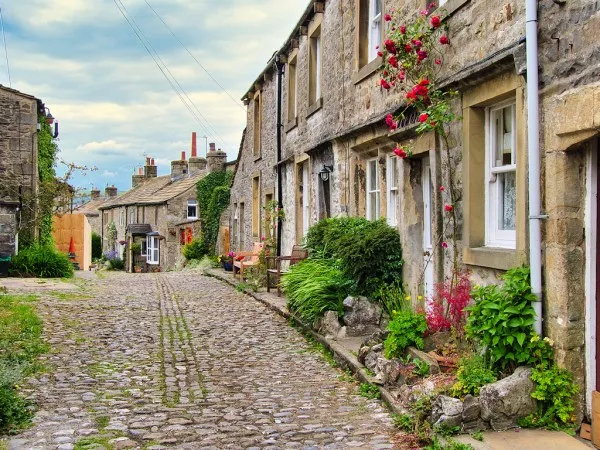
Photo: picturesque Northern England village stone street Yorkshire tourism, via the-yorkshireman.com
There's a gift shop in a small North Yorkshire market town that sells tea towels, fridge magnets, and tote bags all featuring the same image: a stone-flagged street corner that appeared in a popular period drama for the better part of a decade. The show stopped filming there three years ago. The merchandise is still shifting. The irony, says the woman behind the counter, is not lost on her.
"People still come in asking if they might spot the crew," she says. "I have to explain that they moved on. They went somewhere cheaper. And now we're selling pictures of a thing that doesn't really exist here anymore, to tourists who came because of a thing that doesn't really exist here anymore." She laughs, but it doesn't quite reach her eyes.
This town — and she'd rather we didn't name it specifically, for reasons that will become clear — is not an isolated case. Across the North of England, a slow and uncomfortable reckoning is underway in communities that spent years cultivating their on-screen identities, only to discover that their own success has made them unaffordable.
The Economics of Picturesque
The appeal of Northern locations to TV producers has always been rooted in a combination of authenticity and value. Dramatic landscapes, characterful architecture, and a cost base significantly lower than the South made places like the Yorkshire Dales, the Pennine villages, and the former mill towns of Lancashire irresistible to productions working with limited budgets.
But that cost calculation has been shifting for years, accelerated sharply by rising property values, increased location fees, and the downstream effects of the very fame these places acquired through television. When a drama becomes a hit and tourists start arriving, local economies change. Businesses pivot toward hospitality. Property prices climb. And the practical infrastructure of a working-class town — the affordable accommodation for crew, the cheap catering, the accessible car parks — gradually disappears or becomes too expensive to justify.
"We did a cost comparison two years ago," says a production manager who has worked on several long-running Northern dramas. "A location we'd used for years had essentially doubled in effective cost when you factored in accommodation, logistics, and the location fee itself. We could get a comparable look in a town forty miles away for a fraction of the price. It wasn't a difficult decision commercially. But it didn't feel great."
The Businesses Left Holding the Brand
For local business owners, the departure of a production they'd built their trade around can feel like a quiet betrayal — even if nobody made any promises in the first place.
A pub landlord in a village on the edge of the Moors — the kind of establishment that featured as a recurring backdrop in a popular crime series — describes the shift in stark terms. "When they were filming, we had crew in four nights a week, sometimes more. Cast occasionally. Visitors coming because they'd seen the place on telly. It was brilliant. Then the show moved its filming location and it just... fell off a cliff. We went back to being a village pub. Which is fine. But we'd made decisions based on that income."
Those decisions — a refurbishment, additional staff, extended opening hours — are now a liability rather than an investment. He's not bitter, he insists. But he is a good deal more cautious about attaching commercial significance to anything as unpredictable as a television production's location preferences.
The gift shop owner has a similar story. She expanded her range, took on a part-time member of staff, and even commissioned a small line of locally made ceramics inspired by the show. "I don't regret it," she says, carefully. "But I understand now that the production was never really mine. I was just adjacent to it."
The Paradox Nobody Warned Them About
There's a particular cruelty to the situation that several people we spoke to identified independently. The very qualities that made these locations attractive to television — their unspoiled character, their affordability, their sense of being somewhere real and unlacquered — are precisely what gets eroded by the attention television brings.
Tourists arrive. Boutique accommodation follows. House prices rise as city-dwellers discover the place through their television screens and decide they'd like to live there. The working-class texture that gave the location its authenticity gets smoothed away, slowly but unmistakably, by the economic forces that authentic television exposure sets in motion.
"It's a trap," says a local councillor in one of the affected towns, who has been trying to think through what a more sustainable relationship between TV production and local communities might look like. "You want the attention, you want the economic benefit, you welcome the production with open arms. And then ten years later you look around and the thing that made you attractive is gone, the production has moved on, and you're left with a town that's too expensive for the people who grew up in it and too quiet for the tourists who came for the telly."
Where Do the Cameras Go Next?
Producers, for their part, are pragmatic. The search for the next affordable, characterful, visually compelling Northern location is a permanent feature of the industry — and the good news, if you're looking for it, is that there's no shortage of places that fit the brief. Towns that haven't yet been touched by television fame still exist in abundance across the North, and for productions willing to do the legwork, genuine value can still be found.
The less good news is that this process simply replicates the cycle somewhere new. The cameras arrive, the tourists follow, the economics shift, and eventually the cameras move on again.
Some communities are beginning to think harder about how to manage this cycle rather than simply ride it. There are conversations happening in several Northern local authorities about location fees that fund community infrastructure rather than disappearing into general budgets, about agreements that tie production commitments to longer-term local investment, about building something more durable than a few years of crew traffic and a gift shop full of tea towels.
Whether those conversations translate into anything concrete remains to be seen. In the meantime, the woman in the gift shop is still selling the fridge magnets. People are still buying them. And the cobbled street in the photograph is still there, looking exactly as it always did — just waiting, perhaps, for the next production that can afford it.