Who Decides What Northern Sounds Like? The Casting Gatekeepers Shaping Our Screens
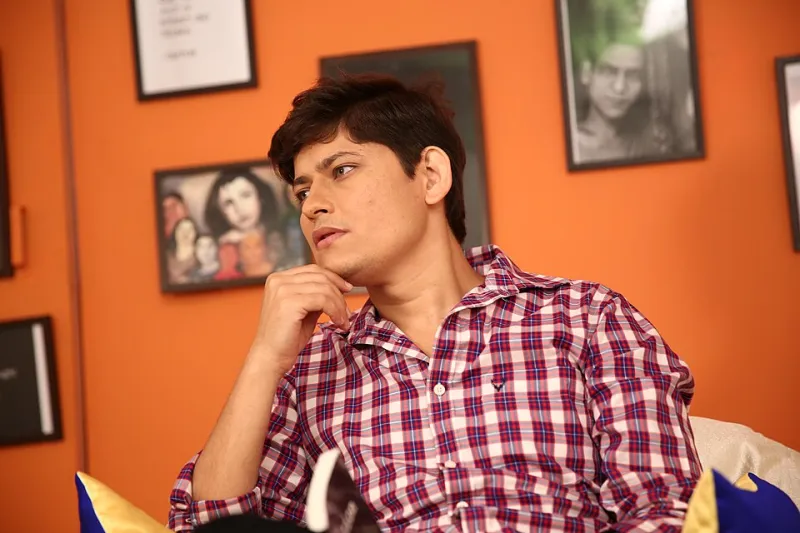
Photo: BMR09, CC BY-SA 4.0, via Wikimedia Commons
There's a moment in almost every casting session for a Northern drama that the professionals in the room rarely talk about publicly. An actor walks in, delivers their lines with genuine warmth and a real regional lilt, and someone around the table quietly wonders: is that Northern enough? Not Northern enough for the character. Northern enough for the commissioners. Northern enough for the audience down south who, rightly or wrongly, the whole production is ultimately being sold to.
That unspoken calculation — invisible to viewers, quietly exhausting for the people involved — sits at the heart of one of British television's most persistent and underexamined tensions. And it's one that Northern casting directors, producers, and the actors caught in the middle are increasingly willing to discuss.
The Brief Before the Brief
When a production company commissions a drama set in, say, Leeds or Salford or somewhere in the Tees Valley, the casting brief tends to arrive with a set of visible requirements — age range, physicality, availability. What it rarely spells out explicitly is the cultural shorthand that everyone in the room already understands.
"There's an unwritten layer to almost every Northern brief," says one Manchester-based casting director who has worked on several primetime series over the past decade and asked not to be named. "It's not always malicious. Sometimes it genuinely comes from the producers wanting authenticity. But the definition of 'authentic' tends to shift depending on who's holding the pen."
That shifting definition is where things get interesting — and occasionally contentious. A Geordie actor auditioning for a role set in Newcastle might find themselves quietly coached to soften certain vowels because the London-based executive producer finds the accent 'too strong for general audiences.' A Yorkshire actor might be passed over in favour of someone from further south who has 'done the accent work.' The irony, as more than one industry professional has pointed out, is that the very thing being sought — genuine Northern identity — is sometimes the first thing to get smoothed away.
Authenticity on Someone Else's Terms
The debate about who gets to define Northern authenticity on screen is not new, but it has sharpened considerably in recent years. Partly that's down to a broader cultural conversation about representation. Partly it's because Northern actors and creatives have simply got louder about their frustrations.
"I've been in rooms where a casting director is clearly enthusiastic about a Northern actor, and then the phone call comes back from the broadcaster and suddenly there are 'concerns about accessibility,'" says a producer based in Sheffield who has developed several regional projects. "What that actually means, in plain English, is that someone in a London office isn't sure their audience will warm to the accent. It's dressed up in softer language, but that's what it is."
For actors, the experience can be disorientating. Several performers from the North who spoke to Up North TV described a version of the same audition experience: being praised for their 'realness,' then receiving feedback that they needed to be 'a bit more relatable.' The gap between those two things — real, but relatable — is where a lot of Northern talent gets quietly lost.
Not everyone in the industry sees it as straightforwardly problematic, though. Some casting directors argue that the decisions being made are genuinely about dramatic clarity rather than cultural bias. "There's a difference between wanting someone to flatten their accent for no good reason and making a practical judgement about what works in a scene," argues one casting professional based in Leeds. "Drama has always involved a degree of performance shaping. That's not unique to Northern actors."
The Rise of the Regional Champion
What has changed, several industry figures agree, is the growing number of people inside the commissioning and production process who are willing to push back on assumptions about what Northern sounds like.
The expansion of production outside London — driven in part by Channel 4's move to Leeds and the BBC's long-standing presence in Salford — has brought more Northern voices into development and commissioning roles. That shift, gradual as it has been, is beginning to show up in casting decisions.
"When you have Northern producers in the room, the conversation changes," says one development executive based at a MediaCity production company. "Not because they're necessarily making different decisions, but because certain assumptions get questioned earlier. The 'too strong' conversation happens less often when the person chairing the meeting grew up in Rochdale."
There are also actors and writer-performers who have effectively bypassed the traditional gatekeeper structure altogether — building audiences through social media, podcasts, and self-produced content, then arriving at the commissioning table with leverage that previous generations of Northern talent simply didn't have. The gatekeepers haven't disappeared, but the gates have multiplied.
What 'Northern Enough' Actually Costs
The practical consequences of these casting dynamics extend well beyond individual auditions. When Northern roles are consistently softened, or filled by actors who have 'done the work' to approximate a regional identity they don't actually hold, the cumulative effect on screen is a version of the North that serves someone else's idea of the place rather than the place itself.
Viewers notice. Maybe not consciously, and maybe not immediately, but the feedback loop between authentic Northern storytelling and Northern audiences is real. Shows that get it right — that cast from genuine regional depth and trust their audiences to follow — tend to develop the kind of loyalty that commissioners dream about. Shows that hedge, that sand down the edges in pursuit of a mythical 'broad audience,' often struggle to land with anyone in particular.
"The frustrating thing is that the evidence is there," says the Sheffield producer. "The shows that trusted Northern identity rather than managing it are the ones people still talk about. The ones that didn't are largely forgotten."
For the casting directors navigating these decisions every day, the picture is rarely as simple as good intentions versus bad ones. It's a web of institutional pressures, commercial anxieties, and genuine creative debates — all playing out in rooms that most viewers will never see, shaping the voices that end up on their screens.
The question of who gets to decide what Northern sounds like doesn't have a clean answer. But the fact that it's being asked more openly, and more loudly, than ever before feels like something worth paying attention to.