Speak Up or Tone It Down: The Hidden Cost of Sounding Northern on Screen
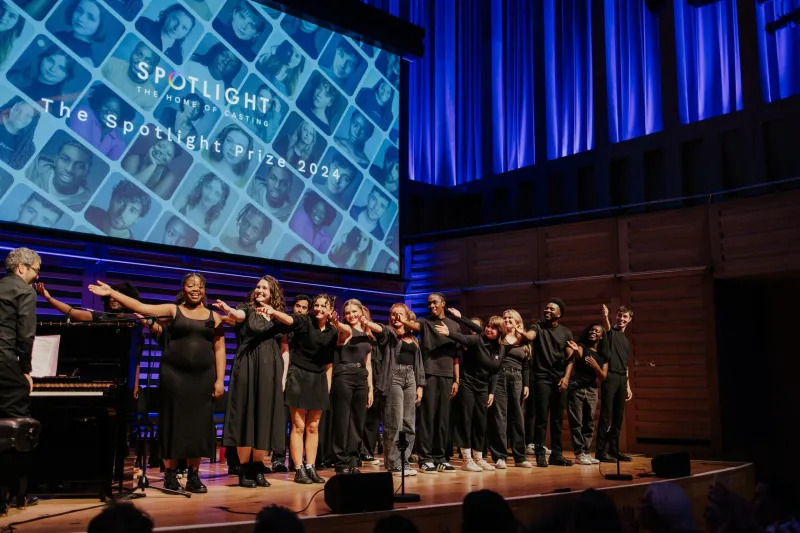
Photo: Northern England actor audition microphone stage spotlight, via www.spotlight.com
There's a moment that a lot of Northern actors describe in almost identical terms. You've done the audition, you've nailed the lines, and then the feedback comes back through your agent with a phrase that lands like a wet flannel: "They loved you, but could you maybe soften it a bit?"
Soften what, exactly? Your performance? Your look? No. Your voice. Your vowels. The way you say "bath" or "grass" or "one". The thing that tells the world exactly where you're from — and apparently, where some people in certain casting suites think you belong.
It's a conversation that's been happening quietly in green rooms, on the phone between agents and clients, and in the margins of feedback forms for as long as Northern actors have been trying to break into national broadcasting. And while plenty of people in the industry are reluctant to say it plainly, the evidence is hard to ignore.
The Feedback Nobody Puts in Writing
We spoke to several actors from the North of England who asked to remain anonymous — not because they're ashamed of what they've experienced, but because they're still working in an industry where burning bridges costs more than biting your tongue.
One actress from Sheffield, who's had recurring roles in two long-running dramas, put it bluntly: "I've had agents tell me directly that if I wanted to be considered for certain network roles, I'd need to be able to 'neutralise.' That's the word they use. Neutralise. As if your accent is something toxic."
Another performer, originally from Sunderland, described spending thousands of pounds on accent coaching — not to learn an American twang for a specific role, but simply to acquire what he calls "a voice that doesn't immediately close doors." He got the work. He's also never entirely forgiven himself for it.
What makes this particularly thorny is that nobody in a position of authority tends to say any of this out loud. Casting breakdowns don't read "Northerners need not apply." Agents don't put it in emails. It lives instead in the gentle art of implication — in audition feedback, in the roles that get offered versus the roles that don't, in the quiet arithmetic of a career.
The Authenticity Paradox
Here's where it gets genuinely strange. The same industry that nudges Northern actors toward vocal neutrality will, in the same breath, commission an entire drama specifically because it's set in Leeds or Liverpool, and specifically because it needs to feel real and rooted and authentic. The accent becomes the selling point — just not necessarily on the body of the actor they hire to carry the show.
A casting director based in Manchester — who did agree to speak on the record — acknowledged the contradiction directly. "There's a two-tier thing happening that the industry doesn't really want to examine too closely. Regional productions celebrate regional voices, absolutely. But when something is being positioned for a broader prime-time slot, or sold internationally, there's still a commercial anxiety about whether a strong regional accent will 'travel.' It's not malicious. It's also not fair."
That commercial anxiety has a long history. For much of British television's golden age, Received Pronunciation was essentially the default setting — the voice of authority, of credibility, of people worth listening to. Regional accents were comic relief, working-class texture, colour in the background. The idea that someone with a Barnsley accent might anchor a national news programme or lead a prestige drama was, for a very long time, simply not part of the conversation.
Things Are Shifting — Slowly
To be fair to the present moment, things have genuinely moved. The success of shows like Happy Valley, Last Tango in Halifax, and Derry Girls — productions where the accent isn't incidental but absolutely central — has demonstrated that audiences aren't just tolerant of regional voices, they actively respond to them. Warmly. In enormous numbers.
Sarah Lancashire, Suranne Jones, Sean Bean — Northern actors who haven't softened anything and have built careers that would make any RP-polished rival envious. They're proof that the industry's anxiety about accents isn't just unfair, it's also commercially misjudged.
But proof and practice aren't always the same thing. For every success story at the top of the billing, there are dozens of working actors still navigating a system that rewards flexibility over authenticity, and still receiving feedback that treats their natural voice as a problem to be managed.
A young actress from Bradford who recently graduated from drama school told us she was encouraged — not by the industry, but by her tutors — to develop what she calls a "switcher" voice. "They were upfront about it. They said, 'You'll get cast as Northern characters because of how you sound. But if you want the full range of roles available to you, you need another gear.' I understood the pragmatism. I still found it a bit heartbreaking."
What Gets Lost in Translation
Beyond the personal cost to individual performers, there's a broader cultural question worth asking. When Northern actors are routinely encouraged to flatten their voices for wider consumption, what message does that send to the audiences watching at home?
If every leading character on prime-time telly sounds broadly southern, or broadly neutral, or broadly other, then the stories being told — even when they're set in Huddersfield or Newcastle or Salford — carry an implicit suggestion that the people who actually live those lives aren't quite the right shape to tell them.
That matters. Television doesn't just reflect culture; it shapes it. And a telly landscape that systematically undervalues Northern voices is one that tells a generation of Northern kids that their way of speaking is something to be corrected rather than celebrated.
The good news — and there is some — is that this conversation is now at least happening in public. Industry bodies are examining diversity of voice alongside diversity of background and ethnicity. Audiences are increasingly vocal about wanting screen representation that sounds like them. And a growing number of Northern actors are refusing, quietly but firmly, to neutralise anything at all.
As the Sheffield actress told us before we wrapped up: "I've stopped apologising for how I sound. It took a while. But I'm done with it now. This voice got me into every room I've ever been in. I'm not leaving it at the door."
Good for her. And about time, too.